
Ecomlytix: analytics customers can trust, at 40,000 records a day.
- Client
- Ecomlytix, analytics SaaS
- Our role
- Technical lead, architecture to delivery
- Built with
- Next.js, NestJS, PostgreSQL, Redis, BullMQ
The situation
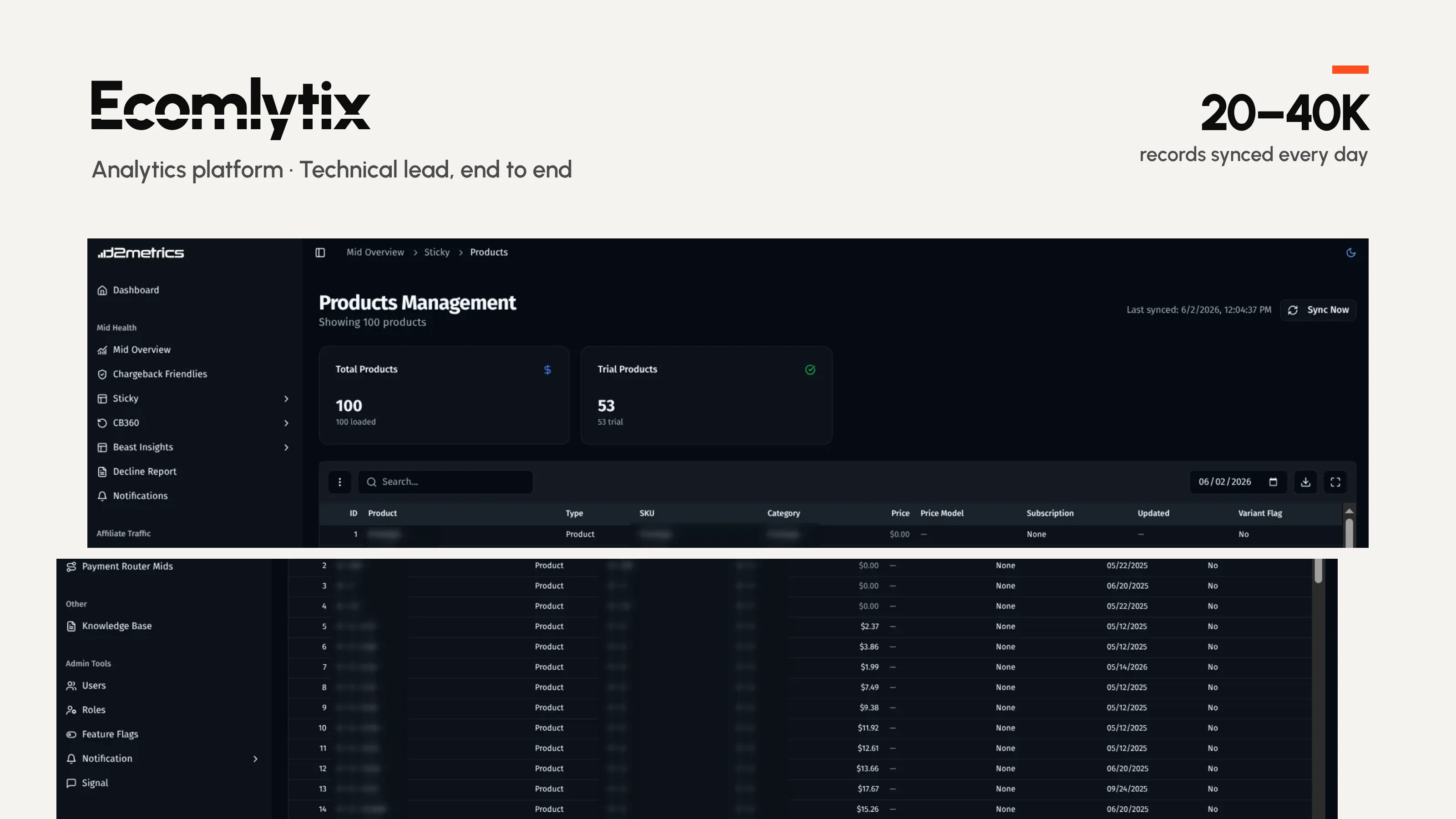
Ecomlytix sells analytics, so a wrong number costs them a customer. Every day the platform had to pull 20,000 to 40,000 records from several sources and keep them in sync across many fields, built by a team with mixed experience.
What we did
- Set up roles and permissions before any features, so access was right from day one.
- Built a daily reconciliation report across the full dataset to flag drift and sync errors.
- Automated deployments, so any developer could ship without touching servers.
- Ran it on servers sized for heavy background jobs and queues.
What changed for the business
Customers get numbers that are checked every day. The team ships 60–70% faster, and new developers contribute without waiting on one person who knows the servers.
What we built
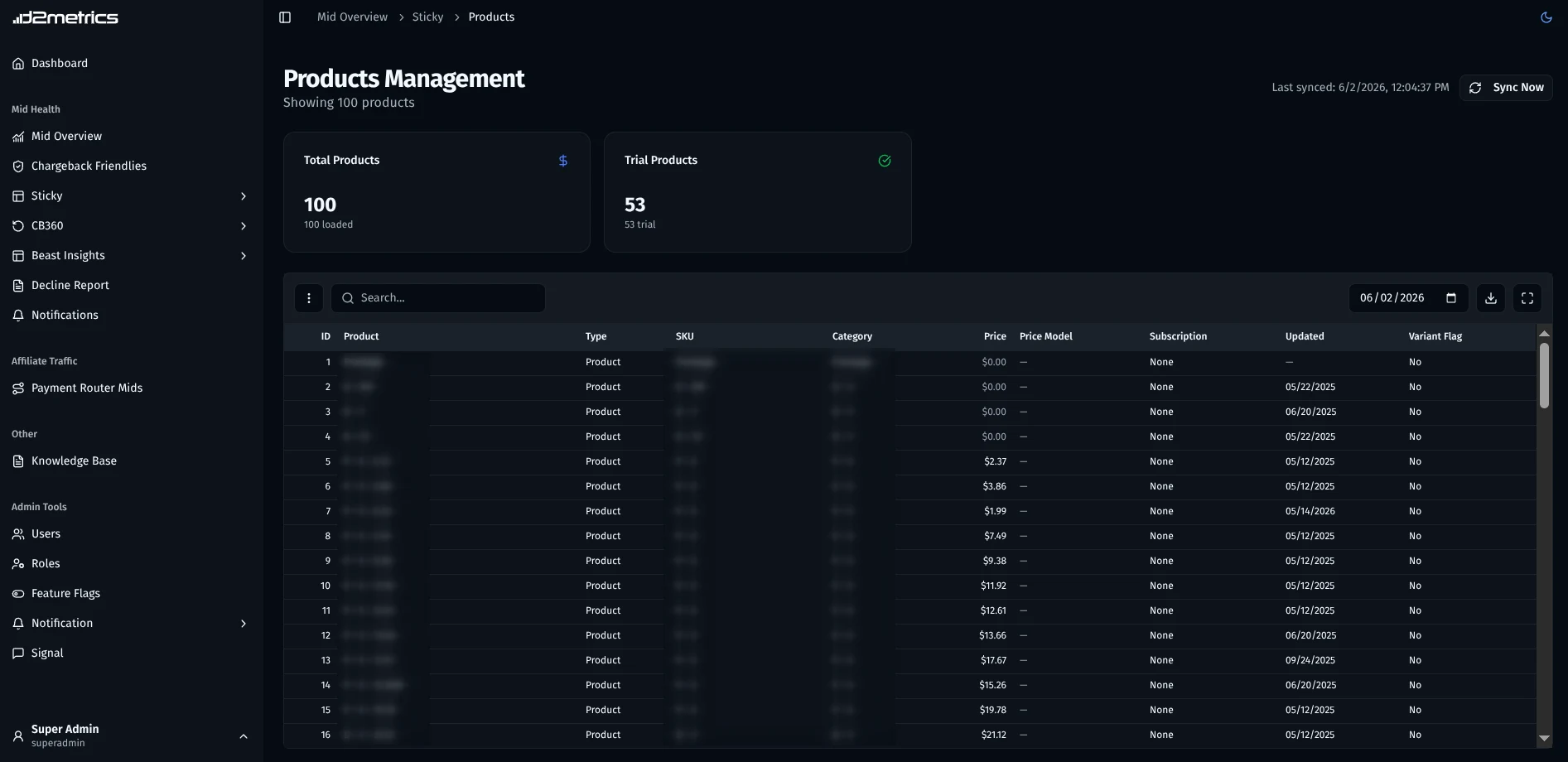
The whole platform, from an empty repository to production: a Next.js frontend, a NestJS REST API, PostgreSQL with schemas tuned for the data, BullMQ workers for the background jobs, CI/CD on GitHub Actions, and a staging and production environment on DigitalOcean with Nginx and SSL. Our founder led the project as technical lead, making the architecture calls, unblocking the team and owning delivery.
Decisions that paid off
Permissions before features
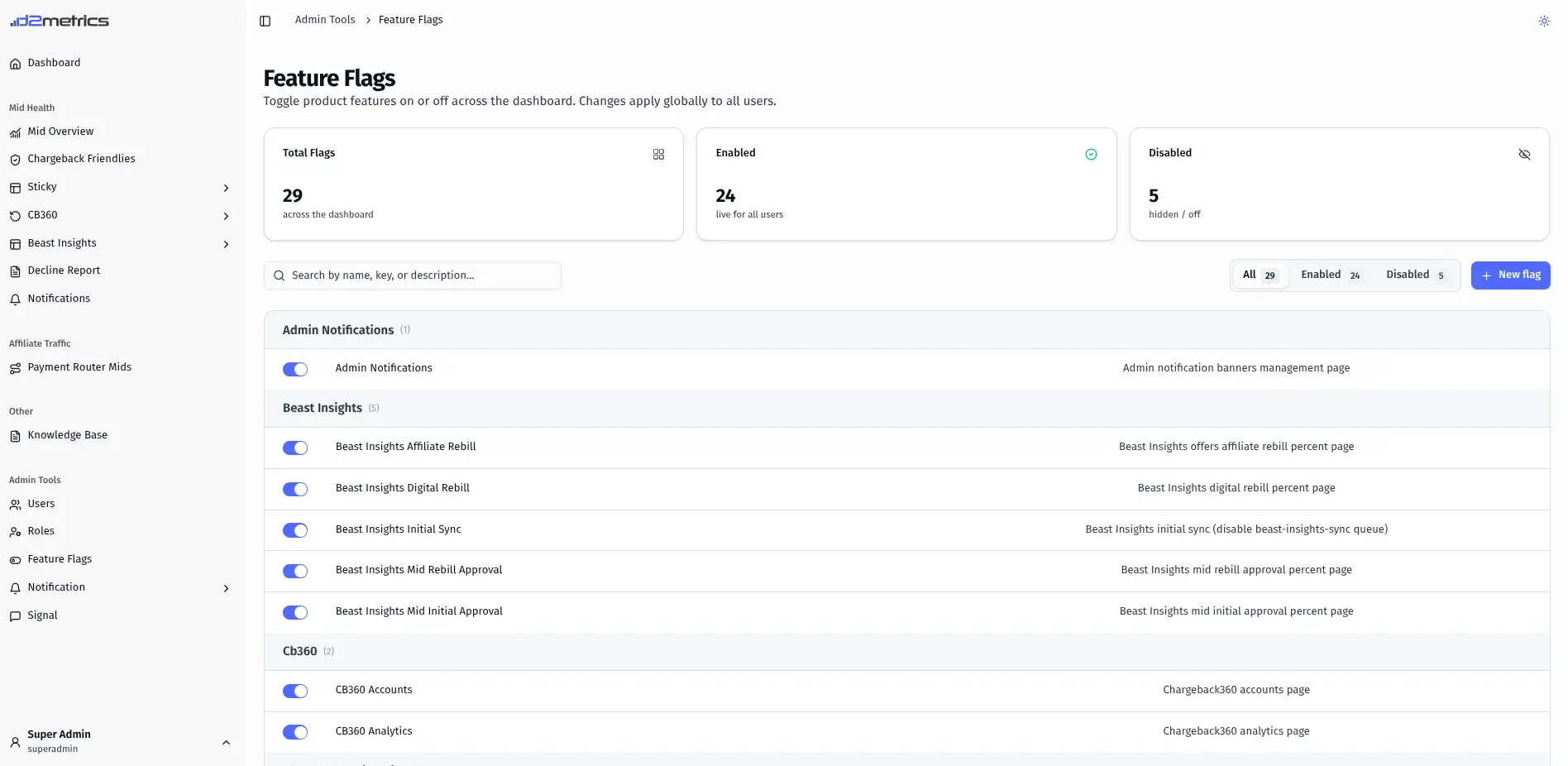
We built roles and permissions before any real feature. Teams that bolt permissions on at the end spend weeks reworking screens they thought were finished. Here every feature was born inside the structure, so developers could not easily get access wrong.
We documented where to extend it, not only how it worked. New developers joined with a clear map instead of guessing.
A daily reconciliation report
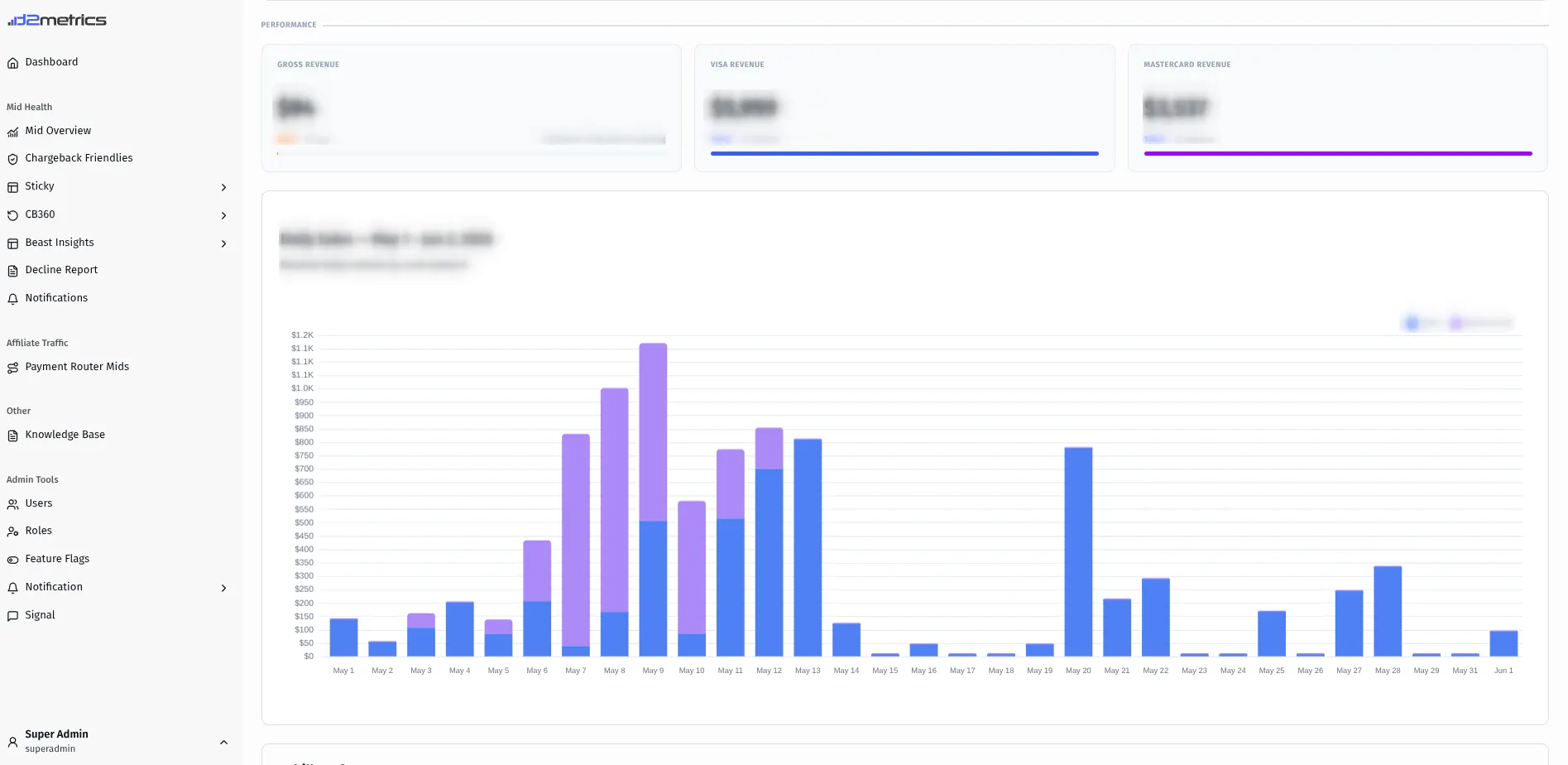
At 20,000 to 40,000 records a day across dozens of columns and several sources, accuracy is the product. We built a reconciliation job that runs every day over the full dataset and pinpoints where data drifted and where a sync failed. It is what gives the team confidence in the numbers, instead of finding out two weeks later that something broke.
Servers, not a hosting platform
The platform needed queue workers, background jobs and room to scale, so we ran it on servers rather than a one-click host. The frontend, backend, workers, queues and databases are cleanly separated. It took more work up front, and every decision after it was easier for it.
Automated deployments
Deploying by hand over SSH costs time and invites mistakes: one wrong command or missing environment variable is enough. We set up CI/CD with GitHub Actions, so developers ship without thinking about servers, and the lead spends time on reviews and code instead of deployments. Until the pipelines were complete, targeted scripts covered the gaps and fixed specific problems when something went sideways.
What we would change
Plain React instead of Next.js
We picked Next.js because it was popular, without asking whether it solved a real problem. It did not: there was a separate backend, so we used neither server rendering nor its API routes. Plain React would have been simpler. Now we look at the data and what the system needs before choosing a framework.
The job queue on its own server from day one
Redis started on the same server as the backend. The job queue grew faster than expected, and we had to move it to a separate queue server sooner than planned.